Special needs & sensory-friendly care
We plan backwards from what your child can manage
Dr Priya Raman leads this part of the practice. If a standard appointment will not work for your child, we do not book one and hope. We build a different one, with you, before you arrive.
The thing that keeps going wrong
Most practices book a twenty-minute slot, put your child in a chair, and then act surprised when twenty minutes was never going to be enough. You get told to try again in six months. You get told he was difficult today. You go home having paid for an appointment in which nothing happened, and you are the one who has to rebuild the whole thing next time.
This page is for parents of autistic children, children with ADHD, children with a learning disability, children with Down's syndrome, a child who uses a wheelchair, a child who does not use speech, and children who are simply frightened out of all proportion and have been for years. The list is not a set of categories we sort children into. It is a set of reasons that a standard twenty minutes does not fit, and every one of them is planned for individually.
We start at the other end. Before we book anything we ask what your child can actually manage — the car park, the lobby, a doorway, a chair, a mirror — and we build the appointment out of that. Some of those appointments are ten minutes long. Some of them contain nothing clinical at all.
We will not promise you a calm visit. Nobody who has met your child can promise you that, and we are not going to pretend otherwise. What we can promise is that we will go at their pace, tell them what each thing is before it happens, stop when they ask us to stop, and write down what we learned so that you never start from scratch again.
Dr Priya Raman, DDS — Paediatric dentist, special needs lead
Priya leads our special needs and sensory-friendly care. She plans desensitising visits — sometimes three or four before anything clinical happens — and works with families on what a good visit looks like for their child specifically.
Ask for Priya when you ring, or write what you need in the form further down this page and we will read it before you arrive.
Desensitising visits
A sequence of appointments in which nothing clinical happens, run in order, before anyone attempts treatment. Each one ends while it is still going well.
Look at the room
You come in, we open the door of the room your child will use, and that is all. Nobody sits down. If the door is as far as you get, the door is the appointment.
A ride in the chair
The chair goes up, the chair goes down, your child works the button. They can keep their coat, their shoes and their toy on.
Meet the noisy things
The suction on a finger, the little mirror on a fingernail, the light pointed at the ceiling. We say what each one sounds like before we switch it on.
Counting teeth with a finger
No instruments. A gloved finger, counting out loud, for as many teeth as your child will allow. Two is a result. Twenty is a result.
The first clinical thing
Usually a mirror examination, sometimes a brush with fluoride varnish. By this point your child has met every part of it separately.
Three or four of these before any treatment is normal. It is not a delay, it is not a failure, and it is not your child being uncooperative. It is how the appointment that finally works gets built. If it takes six, it takes six.
A written care plan, held in the notes
You have explained your child to a receptionist, a nurse, a dentist and then a different dentist. You should not have to do it a fifth time. After the first conversation we write a care plan into your child's record, and it opens automatically for whoever is seeing them.
- What your child’s signals mean — what a hand up means, what covering their ears means, what the sound they make before they have had enough sounds like.
- Words we must not use. Every family has a list. Ours is written down, not remembered.
- What actually helps — the song, the object, the order of things, the person who has to be on the left.
- Who they will see. The same dentist and the same assistant every time wherever the diary allows it.
- What we managed last time, and what the next step is. So we start from where you got to, not from the beginning.
You can read it, correct it and add to it at any point. It is your child's plan; we are only the people holding the file.
What we can set up, specifically
None of this is unusual and none of it needs a special request form. Tell us and it is there when you arrive.
First or last slot of the day
Booked so the waiting room is empty when you arrive. No queue, no other children, no sitting still while somebody else finishes.
The quiet room
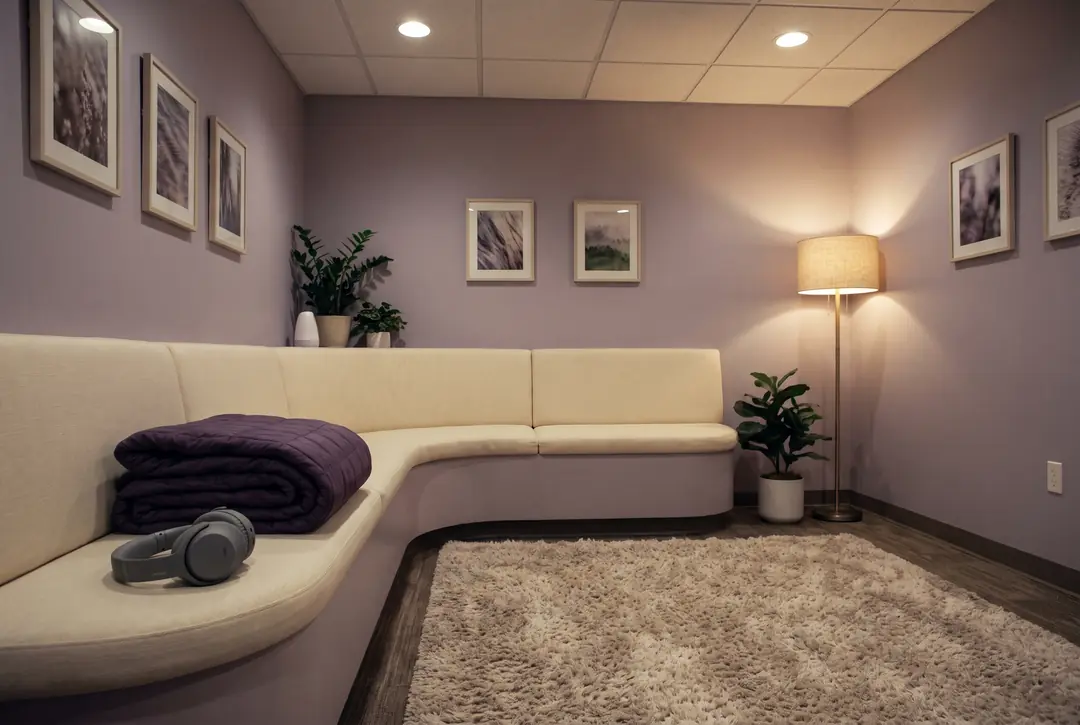
A separate room with a door, a bench and nothing clinical in it. You can wait there instead of the lobby, and go back to it mid-appointment.
Dimmable light, no announcements
The overhead light in the room dims, and we turn off the tannoy for the whole appointment. Nobody is paged while you are here.
Headphones and sunglasses
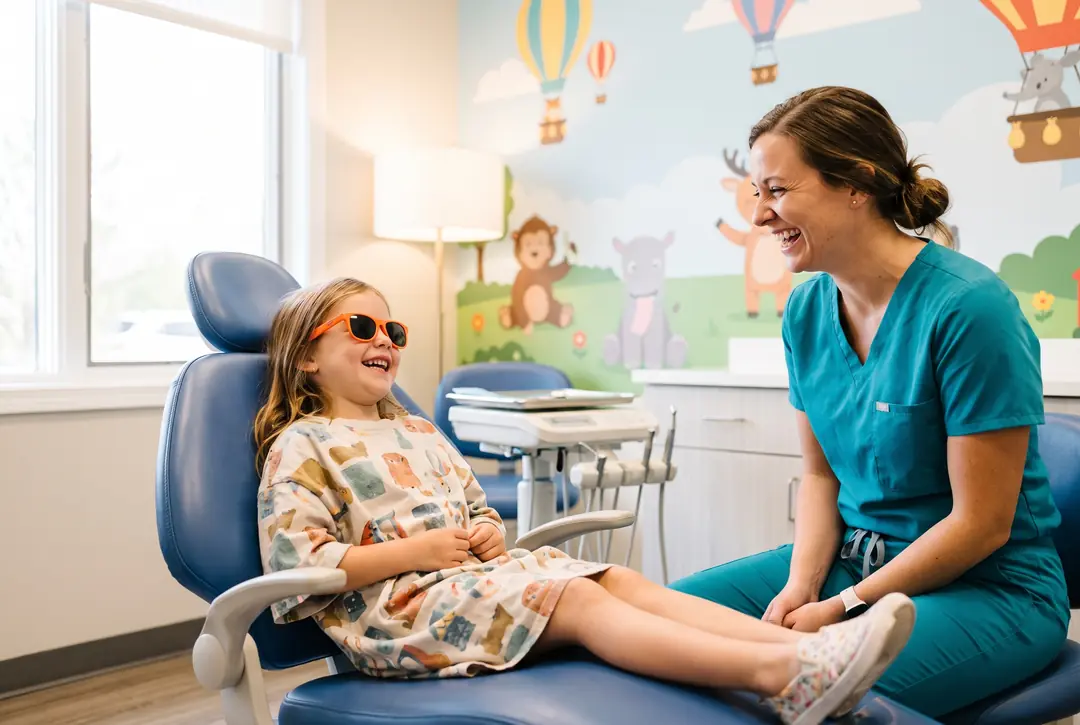
Noise-cancelling headphones and tinted glasses live in every room. Bring your own if your child already has a pair they trust.
A weighted blanket
Kept folded on the bench so your child can see it before it goes anywhere near them. It is offered, never applied without asking.
A visual schedule to hold
A card strip of what happens next, in pictures, that your child holds themselves and can move a marker along. We send a social story by email before the visit too.
Stay in the pushchair or wheelchair
Nobody has to move to our chair. We can examine a child in their own seat, on your lap, on the floor, or standing at the sink.
A parent in the room, always
At any age, for any appointment, including sedation. We will never ask you to wait outside so your child behaves better.
Communication your child’s way
AAC, a speech device, Makaton or BSL-style signing, PECS cards, or a word list you write for us. Ask us before the visit and we will prepare.
Getting in and around
A wheelchair-accessible surgery
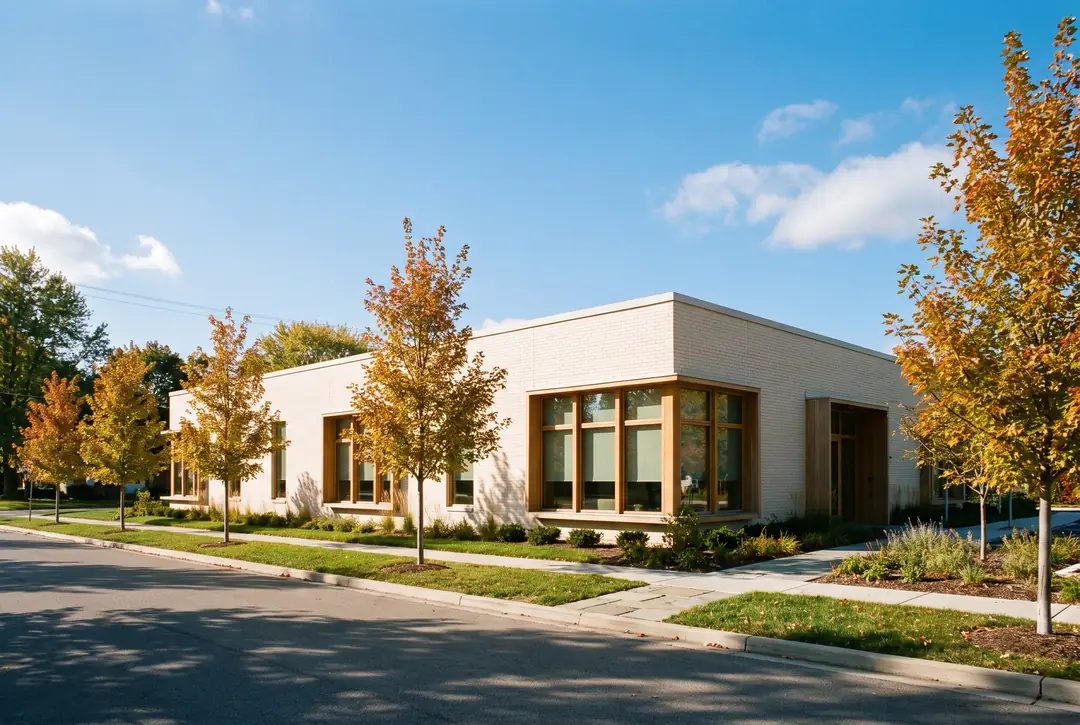
- Step-free from the car park to the chair. No thresholds, no lift, no back entrance to ask about.
- One surgery is set up to work around a wheelchair, so your child can stay in their own seat for the whole appointment.
- If a transfer is needed we discuss it on the phone first — who does it, how many people, and what your child is used to. We do not have a hoist, so we plan the visit around not needing one.
- An accessible WC with a full-length changing bench and space for two adults.
- Two accessible bays directly outside the door. Tell us if you need the door held open and someone will be waiting.
Children whose medical history changes the dentistry
For some children the mouth is the straightforward part. We routinely look after children with:
- Cardiac conditions, including repaired and unrepaired congenital heart disease
- Bleeding disorders and children on anticoagulants
- Immunosuppression, including children on chemotherapy or after a transplant
- Epilepsy and other seizure disorders
- Cerebral palsy, movement disorders and children with a high risk of aspiration
- Children who are fed by a tube, and children on long-term sugar-containing medicines
We ask for your paediatrician's or consultant's name and contact details at registration, and where it matters we write to them and wait for an answer before treatment rather than after it. Bring the current medicines list, including anything given overnight or through a tube.
About antibiotic prophylaxis
Whether a child with a cardiac condition needs an antibiotic before dental treatment is decided case by case, with their cardiologist, against their current diagnosis — not by us alone and not from an old letter. The guidance has narrowed considerably over the years and a child who needed cover at three may not need it at eight.
If your child has ever been told they need cover, tell us at booking and we will contact the cardiology team. Do not stop or start anything on the strength of this page.
When treatment while awake is not the right answer
Sometimes the honest conclusion, after several visits, is that the treatment a child needs cannot be done comfortably while they are awake. Saying that out loud is not giving up on them. Repeating a distressing appointment eight times because we would rather not have the conversation is worse for your child than having the conversation.
There are two routes beyond nitrous oxide, and they are different from each other. Oral sedation means a measured dose of medicine before the appointment, with your child monitored throughout; they stay awake but drowsy, and it does not work on every child. A general anaesthetic is done in a hospital day-surgery unit by an anaesthetist, and it lets us complete every bit of treatment in one visit rather than across a year.
Neither is risk-free, and we will not describe either one that way. Both carry real risks that depend on your child's airway, their heart, their medicines and their weight, and both need a proper pre-assessment. What we will do is set out what each route involves, what it will and will not achieve, and what happens if you decide against it.
Comfort & sedation, in detail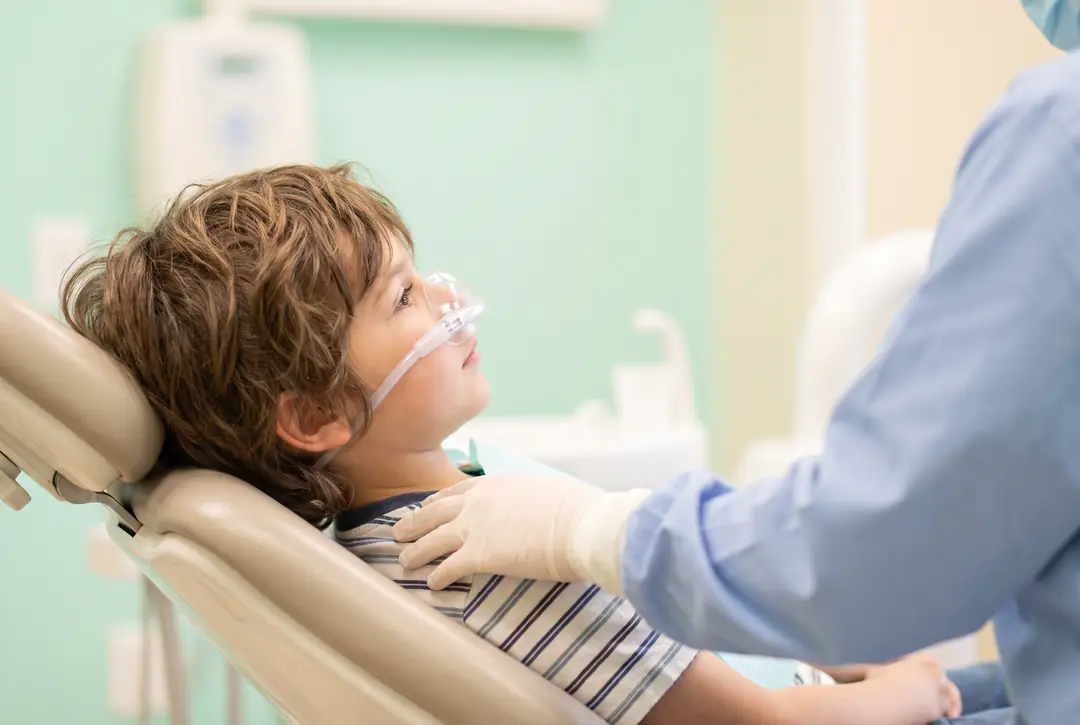
Tell us before you come
Write it here, or ring it through, or email it, or send us the one-page profile you already wrote for school. Any format. We would rather have it three days early than find it out in the chair.
Demonstration form. This is a demo website for a fictional practice. Nothing typed into these boxes is sent, saved or read by anyone, and there is no submit button. On a real site this would reach the practice coordinator.
Tell us about your child
On the real site this would go to Kelly and to Dr Raman, and it would be written into your child's care plan before the appointment. Here it goes nowhere. To speak to a person, ring (614) 555-0142 or email hello@brightlittledentistry.example.
Questions parents ask us first
Do we have to see the dentist in the chair?
No. We can examine a child sitting in their own wheelchair or pushchair, on your lap knee-to-knee, on a bean bag on the floor, or standing up at the sink. The chair is a piece of furniture, not a requirement. If your child will only be seen through a doorway from the corridor, we will start there.
Can we visit before the appointment?
Yes, and we would rather you did. Ring us and ask for a look-round at a quiet time. Nothing clinical happens, there is no examination and no charge for it — your child sees the car park, the door, the lobby, the corridor and the room, and then you go home. For a lot of children that one visit is the difference.
What if my child cannot be examined at all today?
Then they cannot be examined today, and we write down exactly how far we got so the next appointment starts there. This is a normal outcome, not a failed appointment and not something you or your child did wrong. We will tell you honestly whether waiting and repeating is still the right plan, or whether it is time to talk about sedation or a hospital list.
Do you take Medicaid for this?
Yes. We are in-network with Ohio Medicaid managed care dental plans and we take CHIP, and desensitising visits are booked through the same route as any other appointment. Cover varies by plan and by what is done at each visit, so Kelly will check your specific plan and tell you what it covers before you come in.
Ready when you are
Book a first visit online, or ring us and speak to a person. We will tell you what the appointment involves before you come.