About the practice
How we run the place
Not our story so much as our habits: what we promise, what we do between patients, and the things we will tell you we are not.
Built at a child's eye height
Dr Amara Whitfield opened Bright Little in 2014, after four years in general practice spent watching children be treated as small adults who happened to be difficult. The rooms were built for grown-ups. The explanations were built for grown-ups. The child was the part of the appointment everyone worked around.
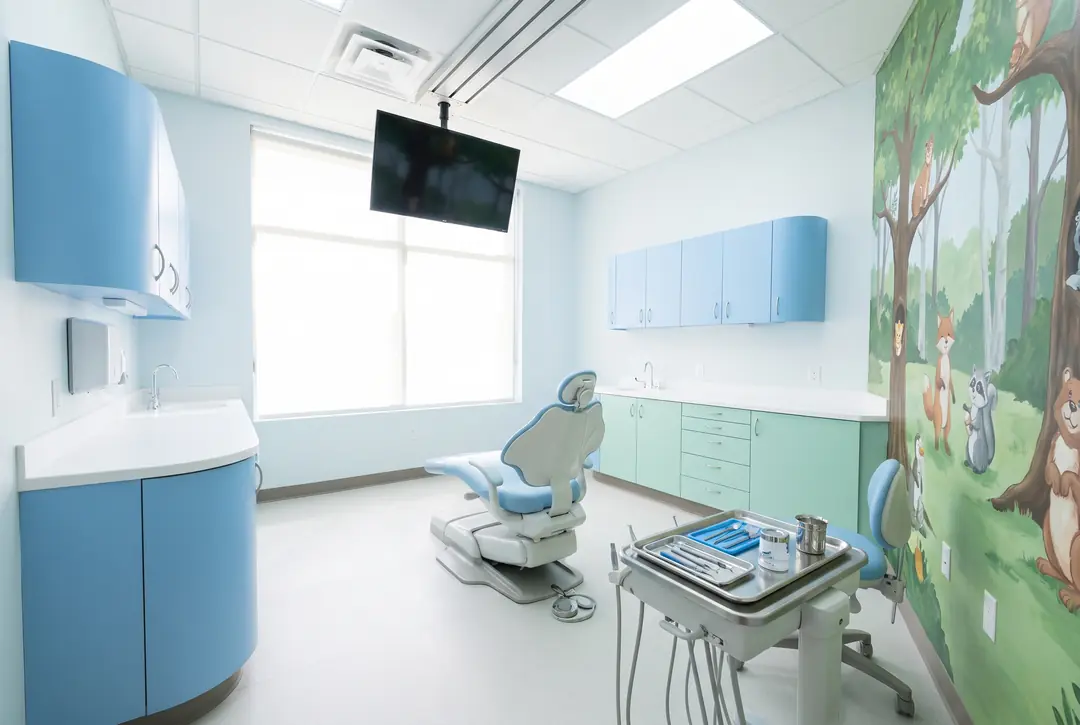
So this practice was drawn from the floor up. The reception counter has a low end a four-year-old can lean on. The chairs in the waiting room are round because a child who trips into a corner has already had a bad visit. Every operatory has a screen on the ceiling, because that is where a child is looking. None of that is decoration — it is the difference between a child who comes back and a child who has to be carried in.
We look after ages 1 to 18, and we take the appointments other practices found difficult: the child who has already had a bad day somewhere else, the child who cannot manage a waiting room, the family who have been told to call back about their Medicaid.
- Opened in 2014 on Kenny Road, and still there.
- Three paediatric dentists, a hygienist, an assistant and a coordinator.
- Ohio Medicaid managed care and CHIP, in-network.
The promises we actually make
Six of them. They are short because we have to keep them on a bad day, in a full waiting room, with a child who has already said no.
We will never tell your child it will not hurt
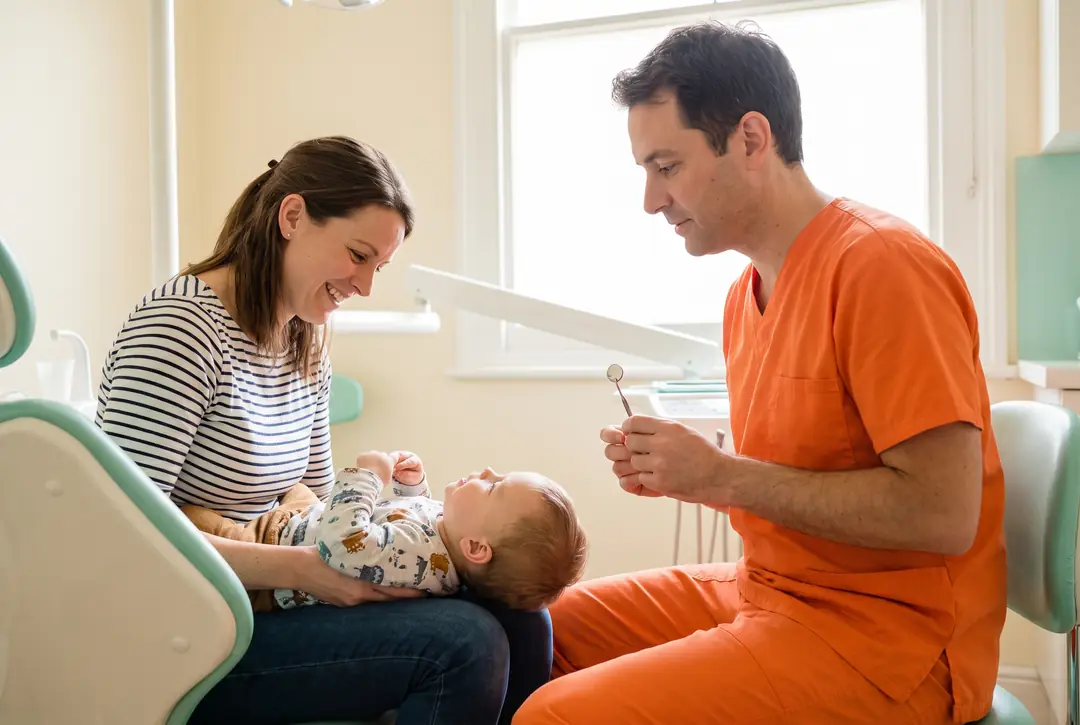
Because we cannot know that, and a child who has been told a fib once will not believe the next thing we say. We tell them honestly what a thing will feel like — cold, buzzy, a squeeze, a push — and we agree a stop signal before we start. When they use it, we stop.
You are welcome in the room, at any age
Not just for babies. Not just for the first visit. If your fifteen-year-old wants you there, you are there; if they would rather you waited outside, that is their call and we will tell you what we found afterwards either way.
A written estimate before treatment, not after
For anything beyond a check-up we submit a pre-treatment estimate to your plan and give you the number in writing first. If the number changes once we are in the tooth, we stop and ask you before we carry on.
We will tell you when the answer is “nothing yet”
A watched early cavity, a bite that is still growing, a gap that will close on its own. Plenty of visits end with a date to come back and nothing else. We would rather lose the appointment than sell you one.
We book the time an appointment actually needs
An anxious child gets a longer slot, not a rushed one. A desensitising visit where nothing clinical happens is a real appointment with a real length, and we do not double-book over it.
You go home with what we saw, in plain words
Written down, without the codes: which tooth, what we found, what we are watching, what we would do and when. If you want the photographs, ask and we will send them.
Cleanliness, in specifics
What happens between two children
Every practice says it is clean. Here is what that sentence means here, in the order it happens, so you can check it against what you see when you are sitting in the room.
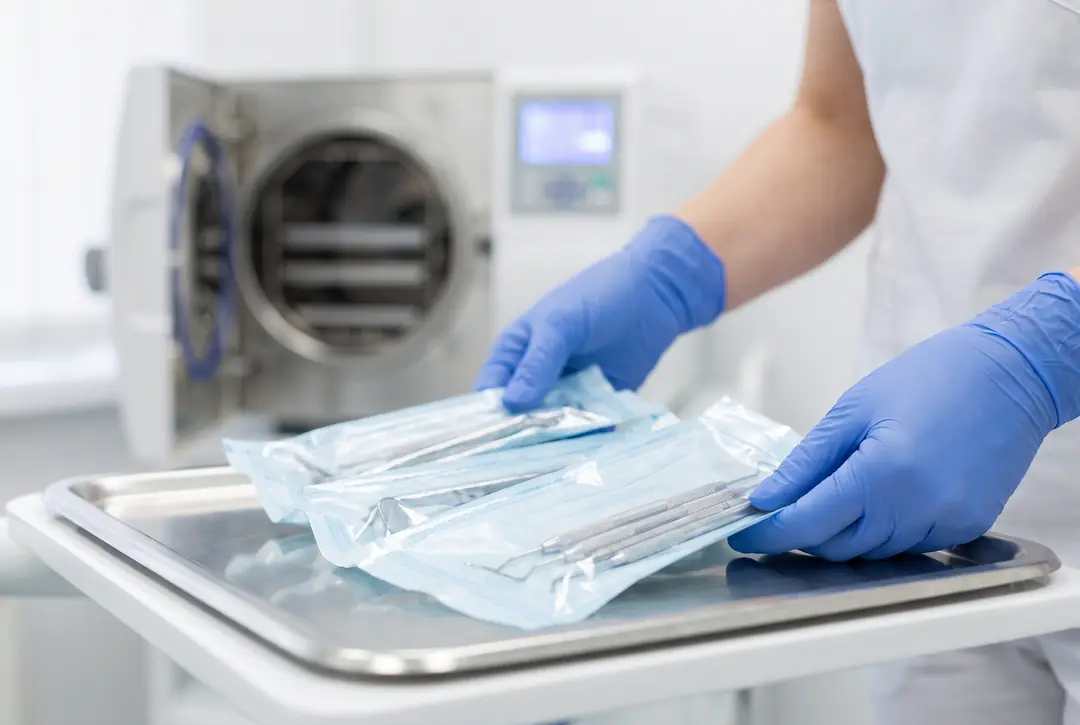
- Instruments are heat-sterilised in sealed pouches, and the pouch is opened in front of you at the chair. If you did not see it opened, ask us to open a new one.
- The autoclave is spore-tested weekly with a biological indicator, and each cycle prints a record we keep. Ask at the desk and we will show you the log.
- Single-use where single-use is right: needles, prophy angles, saliva ejectors, gloves, bibs, suction tips. They go in the bin in front of you, not back on a tray.
- Surfaces are barrier-wrapped between patients — chair controls, the light handle, the ceiling screen remote — and the wrap is changed while the room is turned over, which is why there is a short gap between appointments.
- Waterlines are flushed and tested on a schedule, and the results are kept with the sterilisation records.
If any of that is not obvious to you on the day, ask. Nobody here minds the question, and a parent who checks is a parent we would rather have.
What we are not
A practice that says yes to everything is a practice that is guessing at something. Two of these are worth saying out loud.
We are not an orthodontist
We screen for it. A first orthodontic look at about age seven is the standard recommendation, and we will tell you honestly whether anything needs doing yet — which, most of the time, it does not. When it does, we refer you to an orthodontist and send them what we have already seen. We do not fit braces here, and we do not want to.
What screening involvesWe are not an emergency room
We can see a knocked-out tooth, a broken tooth, a dental abscess or a bitten lip, often the same day. We cannot manage a head injury, a suspected broken jaw, uncontrolled bleeding or a child who is drowsy after a fall — those go to an emergency department, and we will say so on the phone rather than book you in and waste the hour.
Dental emergency steps
The same rule covers sedation. Most children need nothing more than time and a good explanation. When a general anaesthetic is genuinely the right answer, it happens in a hospital with an anaesthetist, not here, and we will tell you plainly which of those we are recommending and why.
Come and check for yourself
Book a first visit, or ring and ask us anything on this page. We are happy to be asked.