Services · Comfort
Comfort & sedation
Most children need nothing more than time, a proper explanation and a nurse who is not in a hurry. When more is needed there is a ladder, and we climb it one rung at a time.
- Ages All ages
- Appointment Depends on the plan
- Options Tell-show-do and a stop signal, Nitrous oxide (laughing gas), Oral sedation with monitoring, General anaesthetic referral
We start at the bottom of the ladder
There is a real temptation in this field to reach for a drug because it makes the appointment quicker and more predictable for the dentist. We try hard not to do that. A child who gets through a filling awake, with a stop signal they used twice and we honoured twice, has learned something about dentists that will still be true when they are thirty.
But climbing slowly is not a virtue in itself, and there is a point where three failed attempts have taught a child that this room is a place where bad things happen. Part of our job is recognising that point before you get to it, and saying so.
Whatever we recommend, you will hear which rung we are proposing, why that one and not the one below it, and what the risks of it are. That conversation happens before the day, not in the corridor on the way in.
The four rungs, in order
Each one is a bigger intervention than the one before it, with more preparation and more risk.
- Rung one
Behaviour guidance, and nothing else
Where the large majority of children start and finish
This is the real work, and it is not a soft option. It is what a paediatric dentist is actually trained in.
- Tell-show-do. Every instrument is named, shown on a finger or a model, and only then used. Nothing appears in a child’s mouth that they have not already met.
- A stop signal agreed before anything begins, and honoured every time it is used.
- Distraction: the ceiling screen, a chosen film, counting out loud, a nurse whose whole job for the next half hour is your child.
- A longer appointment, so that nobody is hurrying and a pause costs nothing.
- Voice control — a firmer, clearer, lower tone used briefly to interrupt an escalating child. Never shouting, never a threat, and we will tell you if we are going to use it.
- Positive reinforcement, aimed at the specific thing they did rather than at being good in general.
- Rung two
Nitrous oxide with oxygen
A mildly anxious child who can still cooperate
Laughing gas, breathed through a small nasal hood that smells faintly of strawberry or bubblegum. Your child stays awake, can talk to us the whole time, and mostly describes it as feeling floaty, tingly in the fingers, or as though the appointment went quickly.
- Give a light meal beforehand — a very full or completely empty stomach both make nausea more likely.
- It takes a few minutes to take effect and a few minutes to wear off. We give pure oxygen at the end and wait.
- Children go back to school the same day and can eat normally. Nobody needs to sleep it off.
- It does not replace numbing. If a tooth needs local anaesthetic, it still needs local anaesthetic.
- It needs a child who can breathe through their nose and will keep the hood on. A blocked nose or a firm refusal makes it a non-starter, and that is fine.
- Rung three
Oral sedation
A younger or more anxious child needing longer treatment
A measured dose of medication given by mouth in the surgery, about an hour before we start. Your child becomes drowsy and much less bothered by what is happening, but is not asleep and is not under general anaesthetic.
- A medical review first: weight, medical history, current medicines, allergies, snoring and airway, and any previous reaction to sedation.
- Fasting instructions that we give you in writing, and that genuinely have to be followed. An appointment gets cancelled on the day if they have not been.
- Monitoring throughout — pulse oximetry, and a second trained team member whose only job is watching your child rather than the tooth.
- Expect a sleepy, wobbly, emotional child for the rest of that day. Unsteady on stairs, tearful about small things, sleeping in the afternoon.
- A responsible adult must drive, and someone must be able to watch them all day and all evening. Not a taxi, not a bus, and not a child left with an older sibling.
- Rung four
General anaesthetic in hospital
Extensive treatment, very young children, or where awake treatment is not safe
Done in a hospital day-surgery unit by a consultant anaesthetist, not here. Your child is fully asleep and all of the treatment is completed in one session rather than spread across five frightening appointments.
- A separate anaesthetic consultation before the date, with the anaesthetist, where you can ask everything.
- Strict fasting, a hospital admission, and most of a day out of your week.
- Right for a two-year-old with decay in eight teeth, for a child whose additional needs make awake treatment genuinely unsafe, and for cases where an incomplete attempt would do more harm than good.
- A real conversation about risk before you consent, with the anaesthetist and with us. General anaesthesia carries risks that nitrous oxide does not, and pretending otherwise would not be doing you a favour.
- We refer, we send the treatment plan, and we see your child back here for the check-up afterwards.
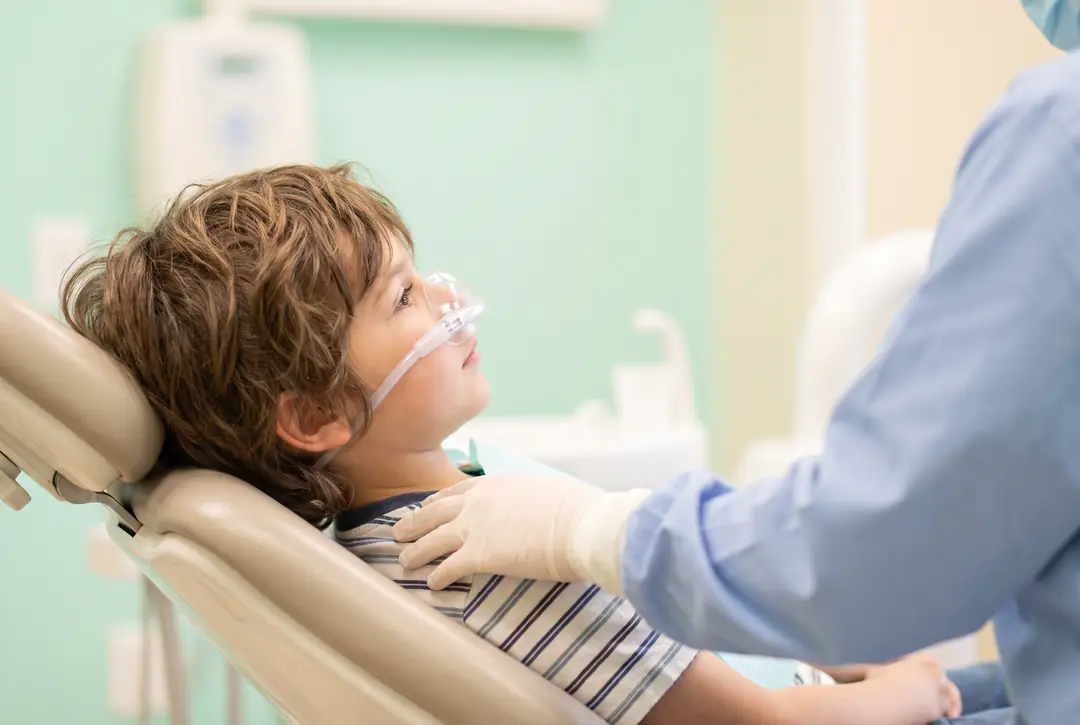
What rung two looks like
Awake, talking, and in charge
The commonest misunderstanding about nitrous oxide is that it puts a child out. It does not. Your child sits up, watches the ceiling screen, answers questions and remembers the appointment. What changes is how much they mind.
The hood is the part children negotiate over — it goes on the nose, it is small, and it comes in flavours. Some children want to hold it themselves first. Some want it off after ten minutes, and off it comes. We have never once won an argument with a five-year-old about a nasal hood, so we stopped having them.
What a normal appointment looks likeSaying the honest thing about risk
Every level on this page carries risk, including the level that involves no drug at all — a frightened child who has been pushed too far carries a risk of their own, and it is not a small one.
We will not tell you that sedation is safe, full stop, because that is not a sentence anyone honest signs. We will tell you what the specific risks of the specific thing we are recommending are, how likely they are, what we do to reduce them, and what happens if we do nothing. Then you decide, and if you would like a day to think about it, take the day.
Before a sedation appointment
- Written fasting instructions, followed exactly. If they have not been, we reschedule rather than take a chance.
- Tell us about any illness in the days before — a cold, a cough, a temperature. A blocked nose changes the plan.
- Bring a list of every medicine, including anything over the counter and anything herbal.
- Comfortable clothes with sleeves that push up, and whatever your child sleeps with.
- Arrange the driving before the day. Your child cannot travel home alone or on a bus.
The rest of that day
- After nitrous oxide: back to school, back to normal food, nothing to sleep off.
- After oral sedation: a sleepy, unsteady, occasionally tearful child until bedtime. Expect a nap.
- Keep them off stairs, bikes, trampolines and anything else that needs balance for the rest of the day.
- Small sips of clear fluid first, then soft food when they want it. Do not push a meal.
- An adult stays with them, awake, until they are back to themselves. Ring us if anything worries you.
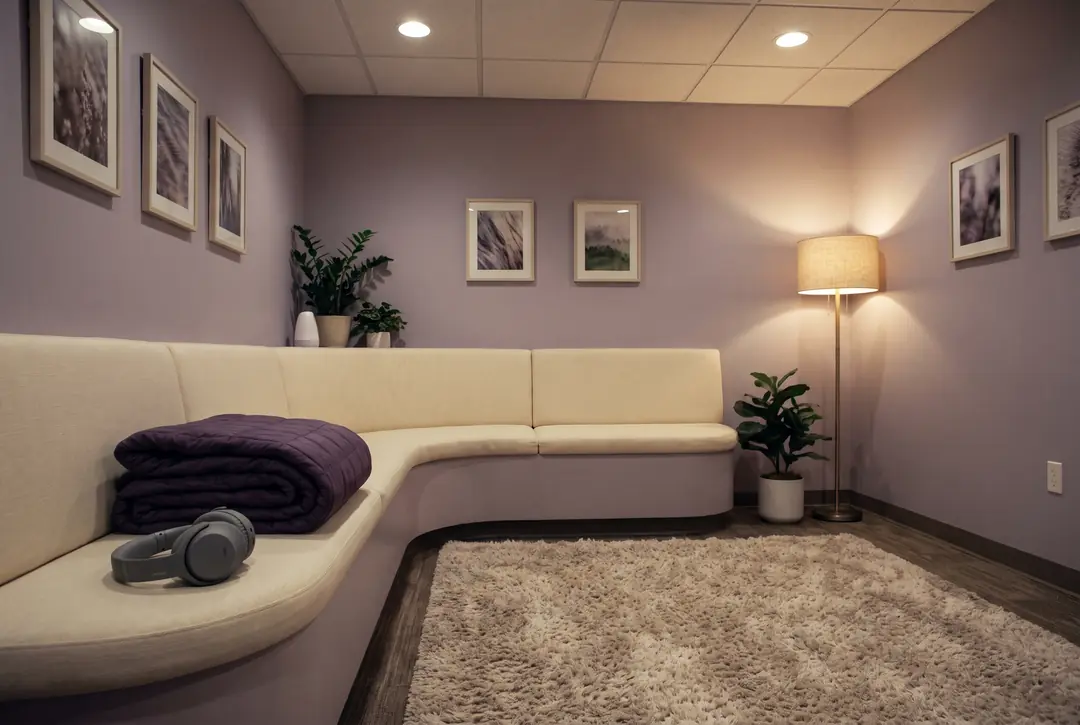
Before you decide that sedation is the only way
A surprising number of children who cannot manage an appointment in a bright room with a stranger can manage the identical appointment in the quiet room, with headphones on, in three short visits instead of one long one, with Dr Raman.
If sound is the problem rather than the dentistry, sedating a child is solving the wrong thing. Start here instead.
Sensory-friendly & special needs careQuestions about comfort and sedation
Which one will you recommend for my child?
We will tell you before the day, in writing, and we will tell you why. The decision comes from four things: how much treatment there is, how long it will take, how old your child is, and how they coped at their last appointment. We start at the lowest rung that has a realistic chance of working, because a child who gets through an appointment with nothing but a good explanation has learned something that lasts. But we do not keep failing upwards through three appointments to prove a point, either.
Is sedation safe?
Every level on this page carries some risk, including the ones that involve no drug at all, and we are not going to give you a safety guarantee. What we will do is tell you the specific risks of the specific thing we are recommending, why we think it is the right trade-off for your child, and what the alternative would involve. Nitrous oxide and a hospital general anaesthetic are very different propositions and it would be dishonest to describe them in the same sentence.
What does nitrous oxide actually feel like?
Children describe it as floaty, tingly in the fingers and toes, warm, or as though their legs have gone heavy. They stay awake, they can hear us and answer us, and they usually remember the appointment. Some feel a little nauseous, which is why we ask for a light meal beforehand rather than a big one or none at all. Once we switch to pure oxygen at the end it clears within minutes, and there is nothing to sleep off.
My child has additional needs. Where do we start?
With a conversation, and usually with Dr Raman, before any appointment is booked. Some children who cannot manage a cleaning in a normal room manage it perfectly in the quiet room with headphones and a weighted blanket, over three short visits, with no sedation at all. Some genuinely need a general anaesthetic for work that another child would sit through awake. Both are legitimate answers and we will not push you toward either one.
Can I be in the room?
For behaviour guidance and for nitrous oxide, yes, always. For oral sedation you are with your child while it takes effect and we will talk to you about the treatment itself, because a room with an anxious parent in it is occasionally harder for a sedated child, not easier — but it is a conversation, not a rule. For a hospital general anaesthetic the hospital sets its own policy, and typically one parent comes with your child until they are asleep.
The treatment itself is described on fillings, crowns and pulpotomies, and if you would rather just ask a person, ring (614) 555-0142 and say it is a sedation question.
Tell us what happened last time
If an appointment somewhere else went badly, that is the single most useful thing you can tell us before booking. It changes what we plan, how long we book, and who your child sees.